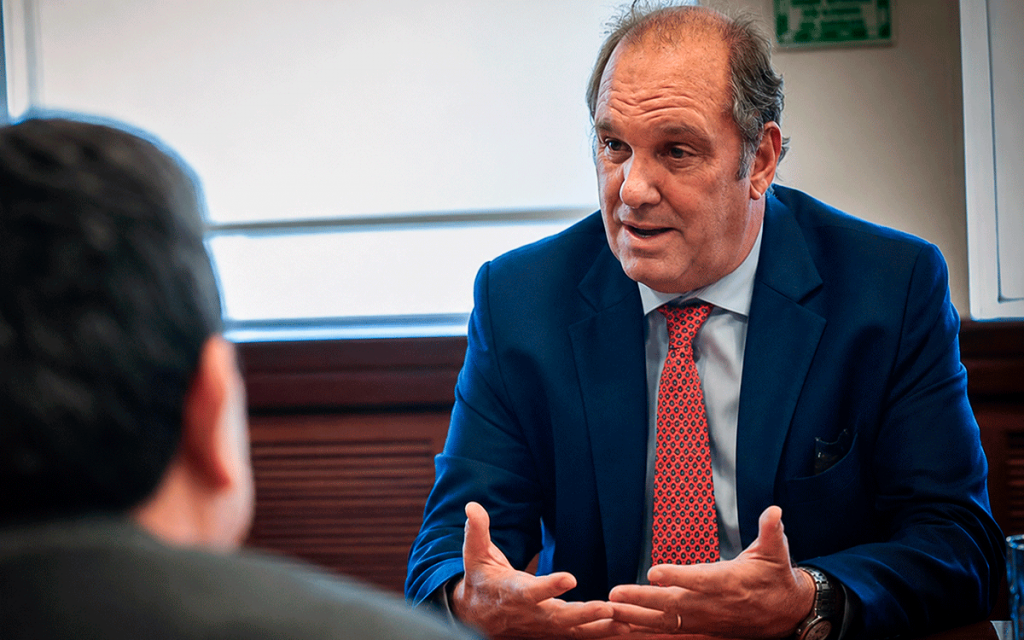
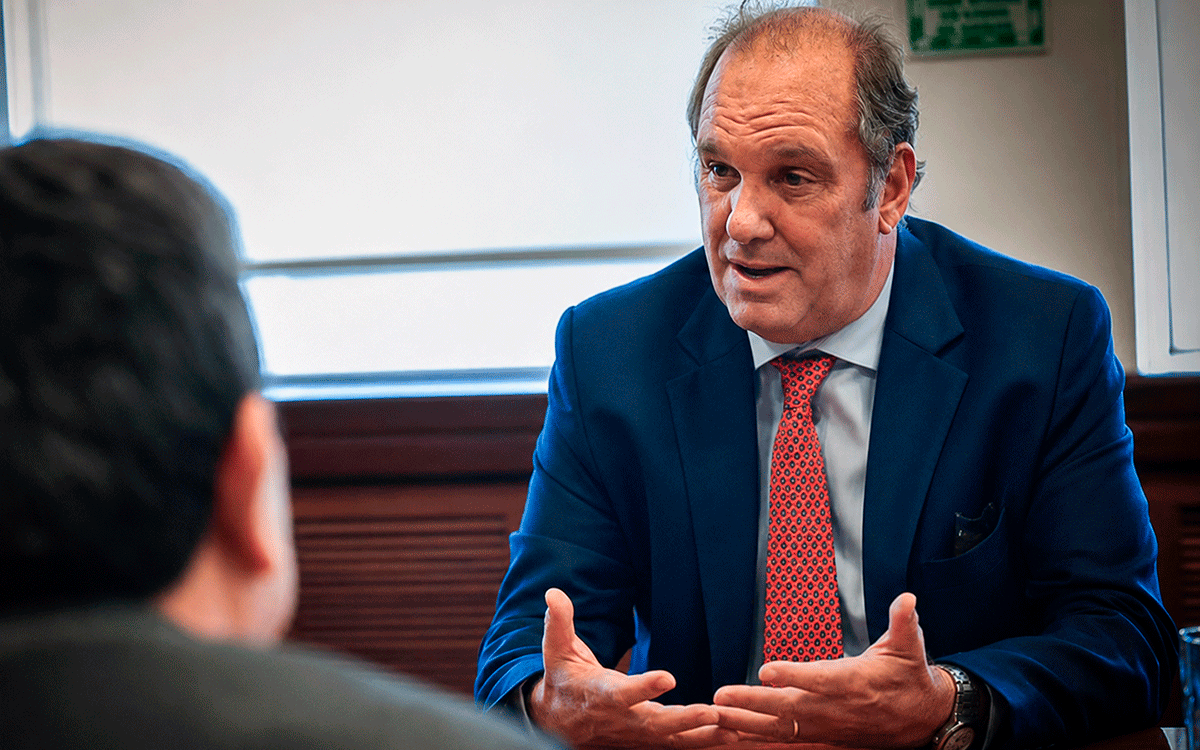
In a context where the mining industry seeks to respond to the challenges associated with sustainability, water management, tailings storage safety, and the growing demand for critical minerals, the debate on best practices and solutions for the sector is becoming increasingly relevant. Within this framework, the Eng. Manuel Rodriguez Mariátegui, general manager of Cerro de Pasco Resources and president of International Congress on Water and Tailings 2026 shared his vision on the main challenges and opportunities currently facing mining.
For the executive, water and tailings management is no longer seen solely as an operational component but rather as a strategic axis within mining development.
“Water and tailings management has become a strategic aspect for the future of mining. Today, the industry must not only demonstrate production capacity, but also operate with high standards of safety, sustainability, and social responsibility,” he stated.
Challenges for the industry
According to Rodríguez, Peruvian mining has shown significant progress in tailings management, especially in large operations that are adopting international standards. However, challenges remain associated with the existence of mining environmental liabilities and the need to strengthen management and oversight mechanisms.
He also highlighted that the growing global demand for copper, zinc, silver, and critical minerals linked to the energy transition poses new challenges for the industry. From this perspective, tailings management should be understood not only from a safety and containment logic, but also as an opportunity to recover value and promote circular economy schemes.
“For Peru to consolidate itself as a sustainable supplier of critical minerals, it will be key to improve government permitting and oversight processes, as well as to promote public-private partnerships for the remediation and reuse of mining environmental liabilities,” he stated.
The growth of mining activity also generates greater demands in water management and a growing demand for transparency and participation. In that scenario, he emphasized the importance of strengthening institutions and promoting clear regulatory frameworks that contribute to more efficient management of water resources and tailings deposits.
Tailings Governance Lessons
International events such as Fundão y Brumadinho they marked a turning point for the global mining industry and left important lessons for tailings management.
Rodríguez explained that there is currently a growing consensus that incidents associated with these facilities are not solely due to technical failures, but also to decisions linked to management and corporate governance. Therefore, he considered it fundamental to directly involve senior management in the safe management of tailings and to strengthen oversight mechanisms throughout the operational lifecycle.
Technology and Sustainability
Another aspect that will shape the future of tailings management will be the incorporation of new technologies. Along these lines, the potential of tools such as artificial intelligence, automation, and blockchain to strengthen monitoring, improve decision-making, and reduce risks was highlighted.
“Technology does not replace experience or technical judgment, but it does allow for more informed decisions, risk reduction, and improved environmental and social performance of projects,” he/she indicated.
Water and tailings: key factors for new investments
Water and tailings management has become one of the most decisive factors for the development of new mining projects. Rodríguez stated that the viability of an investment no longer depends solely on the quality of its mineral resources or its profitability, but also on how it manages water, tailings, and its relationship with the environment, aspects increasingly valued by communities, investors, and financial institutions.
Congress will gather international specialists
These challenges will be analyzed during the International Congress on Water and Tailings 2026, which will take place on the days June 11 and 12 at the Hotel José Antonio Deluxe in Lima and will bring together specialists from Brazil, United States, Chile, Australia, Germany, and Spain.
The agenda includes conferences on governance, water management, automation, artificial intelligence, blockchain, risk assessment, and sustainability applied to tailings facilities. As part of the complementary activities, the international course “Engineering for Safer Tailings Storage Facilities: Design, Governance, and Risk Management,” led by specialist Bryan Ulrich, will be held on June 10.
“The objective is to promote a shared vision among the state, companies, academia, and communities that will drive a modern, sustainable mining industry aligned with future challenges,” concluded the president of the international congress.
For information about exhibition booths and sponsorships, interested parties may contact 936 969 130 or write to congresos1@encuentrometalurgia.com and informes@encuentrometalurgia.com