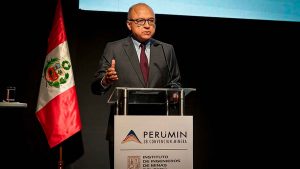
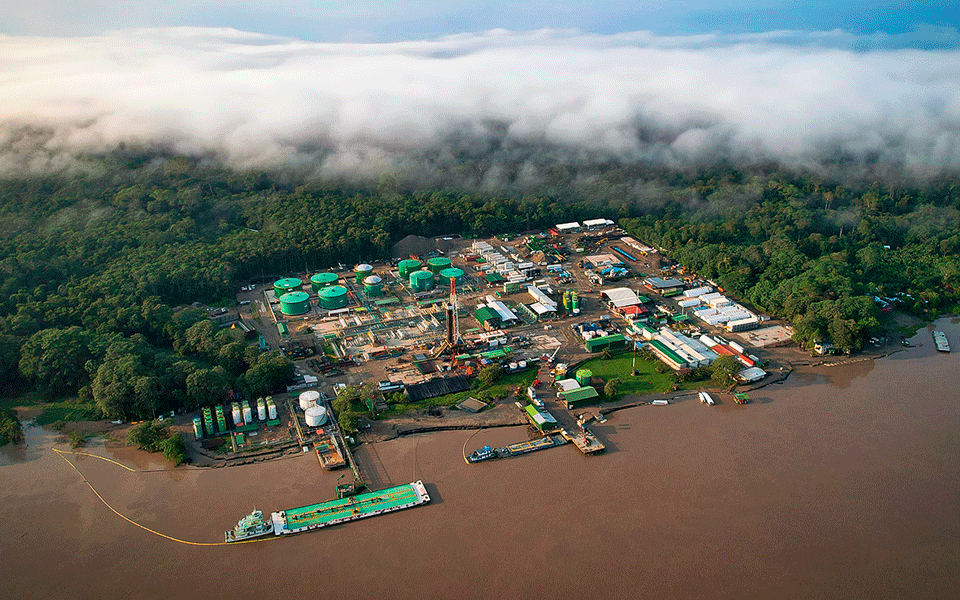
Peruvian oil production is going through one of its most complex moments in recent decades. This was stated by Carlos Gonzales, general manager of Enerconsult and member of the PERÚ ENERGÍA Consultative Committee, who warned that The country currently produces between 35,000 and 40,000 barrels of oil per day., despite having fields that could raise that figure to 60,000 barrels per day, because fields like Lot 192, Lot 64, and other assets located in the northern jungle and Talara remain paralyzed despite having reserves and production capacity.
For Gonzales, the drop in production is due to a combination of factors. Among them are the natural decline of mature fields, the lack of exploration to discover new reserves, the absence of incentives to recover marginally economical wells, and an oil policy that, in recent years, has failed to promote new investments.
“If the awarding and continuity of oil concessions had been managed properly, we would not be in the current situation.”, he maintained.
One of the most critical aspects pointed out by the specialist is the royalty regime. Gonzales recalled that in Peru there are more than 5,000 closed or temporarily abandoned wells, of which approximately 4,500 are located in Talara. Many of them, he explained, cannot resume production because they face royalties ranging from 30% to 50%, percentages that ultimately drive up operating costs significantly. “The royalty is part of the production cost. When it's too high, projects are no longer economically viable,” he stated.
The general manager of Enerconsult also questioned the long regulatory timelines facing the industry. According to him, The approval of environmental and social permits can take between six and seven years before an exploratory project can become a productive operation.. Likewise, he warned that oil contracts lack adequate mechanisms to guarantee investment continuity, a situation that discourages operators as their concessions approach expiration. Added to this, he indicated, is weak institutionalism and high turnover of authorities linked to the sector.
Another fact that concerns the specialist is the country's growing energy dependence. Gonzales recalled that Peru has reserves exceeding 300 million barrels of oil., but produces only between 35,000 and 40,000 barrels per day compared to a consumption of nearly 300,000 barrels per day. This means that National production covers only a fraction of domestic demand, forcing the country to rely more and more on imports to supply its market.
These and other challenges will be analyzed on June 17th and 18th at PERU ENERGY, the main meeting of business leaders, authorities, specialists, and investors in the Peruvian energy sector. The event has been consolidated as a dialogue platform to address the challenges facing the industry and promote proposals aimed at strengthening energy security, driving new investments, and improving the country's competitiveness in a context of energy transition.
As a member of the PERU ENERGÍA Advisory Committee, Carlos Gonzales will participate in the panel dedicated to the situation of the Peruvian oil sector, where he will share his vision on the reforms necessary to recover national production and leverage the country's hydrocarbon potential. In a scenario marked by the need to guarantee energy supply and attract long-term capital, the debate on the future of oil in Peru becomes more relevant than ever.