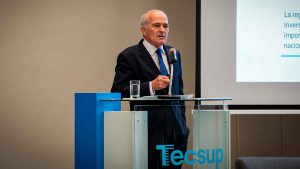
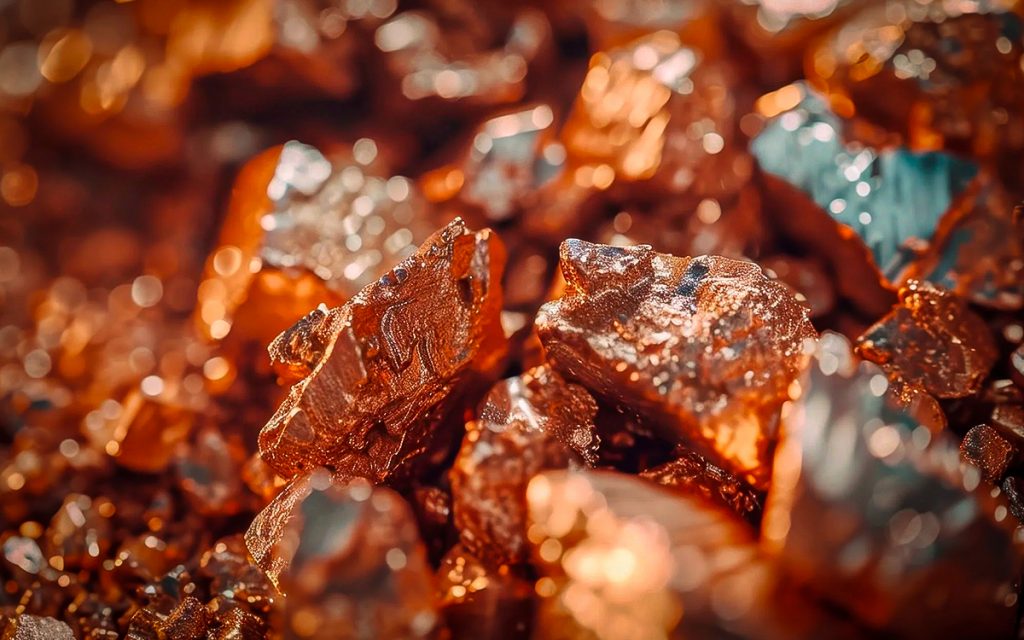
The international price of copper could remain at high levels over the next five to ten years, driven mainly by global demand growth linked to new technologies and the energy transition. This was stated by Diego Macera, director of the Peruvian Economy Institute (IPE).
During his participation in the Indumin 2026 convention, Macera explained that while it is impossible to predict with exactitude the future behavior of commodities, analyzing supply and demand trends allows for the identification of probable scenarios for the red metal market.
According to his statement, copper is directly related to multiple economic and technological transformation processes that are occurring globally, such as the advancement of electrification, the growth of electric vehicles, the development of new electricity transmission networks, and the expansion of technologies associated with artificial intelligence.
In that context, the economist maintained that the demand for this metal is increasing at a faster rate than the mining industry's capacity to expand production.
“Demand is growing very strongly, while supply cannot expand at the same pace because developing new mines takes many years. That difference ends up pushing prices up,” he explained.
According to the specialist, this gap between supply and demand could sustain a prolonged cycle of high prices for copper on the international market.
Different behavior of gold
Macera also referred to the behavior of gold, whose price responds to different factors than copper. Unlike the latter, gold has limited industrial use and its quotation is usually more associated with its condition as a financial safe haven asset.
In times of global uncertainty —such as international conflicts, financial volatility, or dollar fluctuations— investors tend to increase their demand for gold as a way to preserve value.
This characteristic makes the price of the precious metal more volatile than that of other minerals tied to industrial activity.
Impact of illegal mining
The economist warned that high gold prices are also creating incentives for the growth of illegal mining, an activity that moves significant sums of money in the country.
According to IPE estimates, illegal gold mining in Peru generates approximately US$12 billion annually, making it one of the country's largest illicit economies.
Macera pointed out that this flow of resources represents an additional risk, as it can facilitate the purchase of political or institutional influence.
Furthermore, he warned that the increase in copper prices could also begin to incentivize illegal activities related to this metal, expanding the scope of the problem.
In that regard, he considered it necessary for public policies to distinguish between small producers seeking to move towards formalization and those groups directly linked to criminal structures, on whom —he indicated— the action of the judicial and police system must be firmly applied.