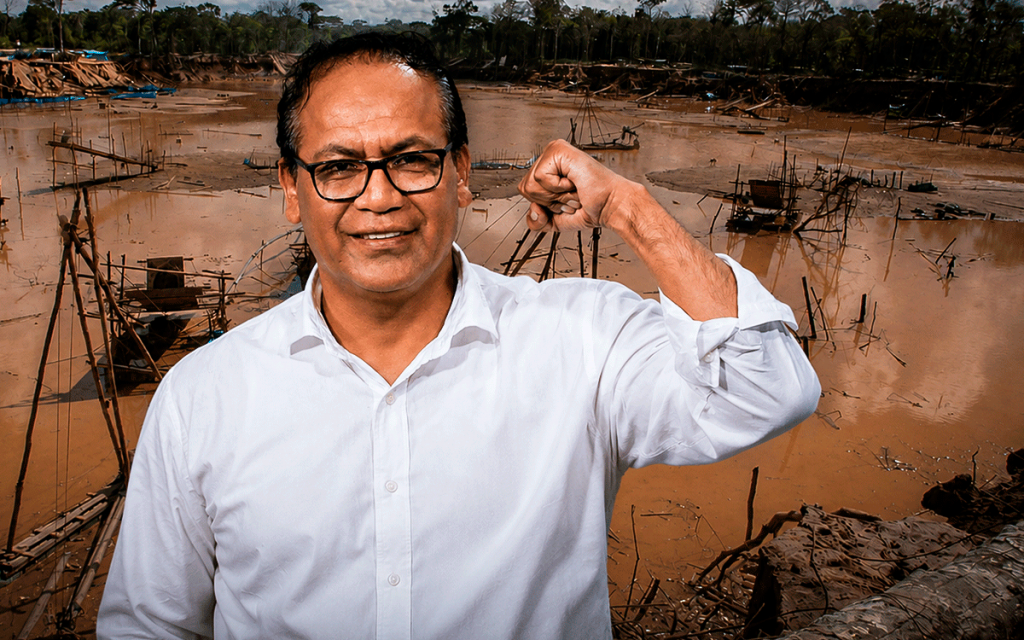
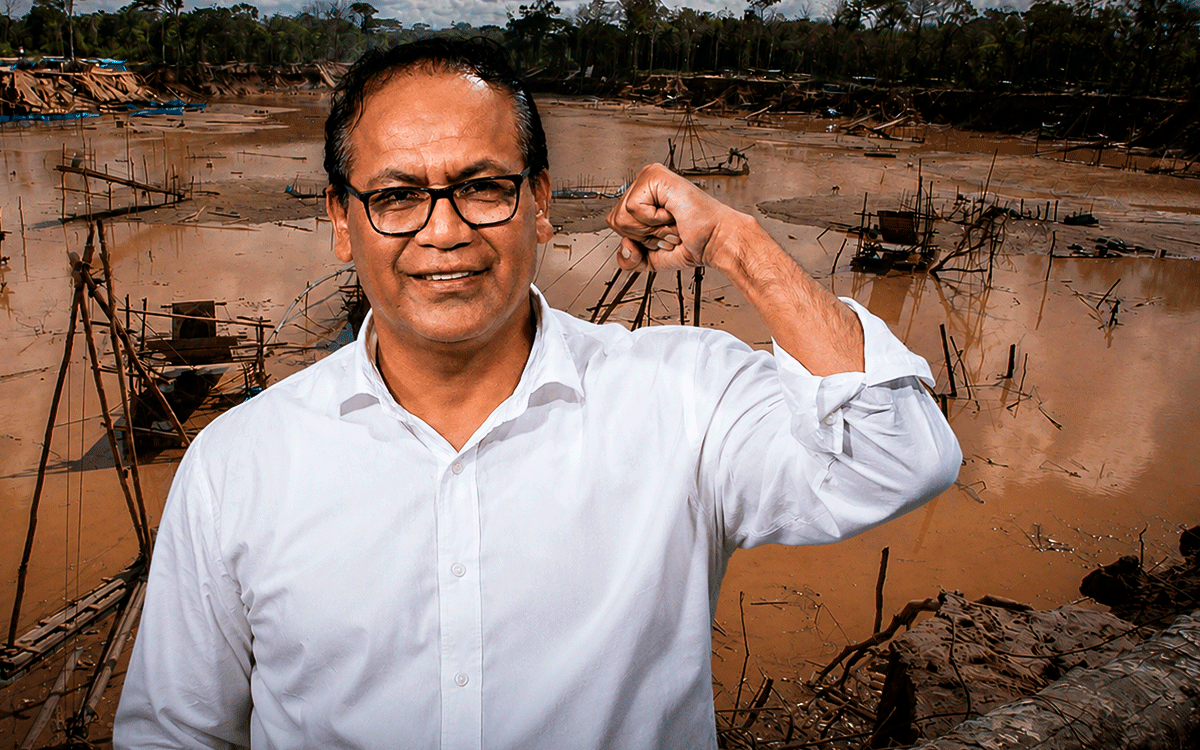
A legislative project driven by the presidential candidate Roberto Sanchez has generated questions among specialists in the mining sector and former authorities, who warn that some of its provisions could weaken the control mechanisms applied to extractive activities and open up spaces that could be exploited by operators linked to illegal mining.
The initiative, named “Framework law on mining with ancestral practices”, was presented during the current election campaign and proposes the creation of a special regime for certain segments of artisanal and small-scale mining. However, some of its articles have raised concerns due to the exceptions it contemplates regarding requirements currently demanded by the State.
One of the most debated points relates to the obligations linked to mineral traceability. The proposal establishes that certain groups of producers would be exempt from submitting documentation related to the use of explosives, the acquisition and transport of chemical inputs used in mineral processing, as well as certain environmental management instruments.
For the specialists consulted, these flexibilities could generate risks in a context where the illegal mining maintains a strong expansion in different regions of the country. According to them, the reduction of controls on sensitive materials such as explosives and chemical inputs could hinder the inspection and monitoring efforts carried out by the competent authorities.
Luis Miguel Incháustegui, former Minister of Energy and Mines, stated that the proposed exceptions would represent an incentive for activities operating outside the law. “It's a promotion of illegal mining. ”They are unacceptable exceptions. It's like a blank check for illegal immigrants to arm themselves for their activities," he stated.
The initiative also includes provisions related to the commercialization of minerals extracted by groups under the proposed regime. In this regard, it establishes simplified mechanisms for documenting purchase and sale operations through electronic receipts issued by authorized buyers.
However, Gonzalo Quijandría, vice president of the National Society of Mining, Petroleum and Energy, questioned the effectiveness of such a mechanism as a traceability tool. In his opinion, the issuance of tax receipts allows for the accreditation of an economic transaction, but does not guarantee the identification of the real origin of the traded mineral.
The observations also extend to the conceptual approach of the proposal. Some specialists consider that the category of “ancestral mining” used in the project raises questions about its practical application and the criteria that would allow differentiating it from other segments of formal or formalizing mining activity.
Diana Gonzales, vice president of the Congress's Energy and Mines Committee, warned that the proposed measures could weaken the State's oversight capacity at a time when citizens are demanding greater action against illegal economies linked to mineral extraction. “True inclusion does not consist of eliminating controls,” she stated.
Experts agree that requirements related to the use of explosives, chemical inputs, and environmental management constitute fundamental elements for ensuring the legality, sustainability, and safety of mining operations. Therefore, they consider that any regulatory modification must maintain effective control and traceability mechanisms to combat illegal mining and strengthen formalization processes.
The debate is taking place in the midst of an election campaign where proposals related to mining, formalization, and the fight against illicit activities have gained particular relevance, due to the growing economic, environmental, and social impact generated by the expansion of illegal mining in various areas of the country.