

TMF Group, a leading provider of administrative and regulatory compliance services, published the 13th edition of its annual report. Global Business Complexity Index (GBCI), which analyzes 81 jurisdictions representing more than 90% of the global economy and assesses the business environment for companies and investors.
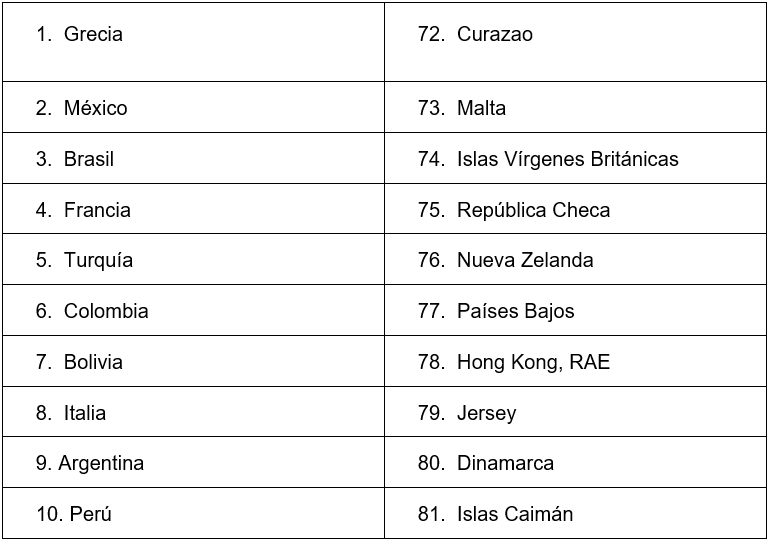
In this edition, Peru ranks tenth, returning to the Top 10 most complex jurisdictions for doing business globally. This position reflects a setback considering that in 2025, the country had managed to leave this selection, ranking 13th.
After three years of sustained improvement (2023, 2024, and 2025), an analysis compiled by TMF Group shows that in 2026, Peru still has work to do to improve business opportunities. Although the Andean country ranks among the 10 most complex globally, it can be observed that in Latin America, it surpasses five other countries: Mexico (2nd), Brazil (3rd), Colombia (6th), Bolivia (7th), and Argentina (9th).
Digitalization, a double-edged sword for Peru
globally, the GBCI 2026 Identify the main drivers of complexity in three key areas: accounting and taxes, employment, and legal entity management.
In previous rankings, factors such as geopolitical instability, the shortage of specialized labor, and difficult fiscal and accounting conditions were the most relevant elements of business complexity in Peru, according to TMF Group. However, for this year, the digitalization process has been identified as the main obstacle.
In the past year, Peru has focused on digitalization to improve business resilience, including the adoption of advanced e-commerce platforms, to allow SMEs in particular to access markets more easily. However, the Index considers digitalization a double-edged sword, as it presents both challenges and advantages for foreign companies operating in the jurisdiction.
This digitization process is one of the main factors complicating doing business in Peru. As authorities implement new digital requirements and processes, companies must remain agile and keep compliance systems updated, which increases operational complexity.
At the same time, while Peru has made progress in digitizing corporate and tax procedures, the maintenance of processes requiring physical presence continues to limit the efficiency of these efforts. This coexistence of digital systems and traditional practices generates operational friction and contributes to the structural difficulty of the business environment.
In 2026, 58% of jurisdictions worldwide require at least some companies to issue electronic invoices, up from 54% the previous year and a substantial increase compared to 38% in 2020. The strengthening of mechanisms such as electronic accounting points toward a model of greater control and oversight by authorities, which increases compliance requirements for companies.
However, the obstacles created by an ongoing digitization process would disappear once the changes and adaptations are fully adopted by authorities and companies, gradually transforming their services through process automation and the improvement of their management services, mitigating some of the complexity.
“When companies successfully adopt digital tools, they will be able to streamline presentations, clarify obligations, and simplify interactions with authorities, which will have a positive impact. Companies that invest in compliance, technology, and processes will be best positioned to operate efficiently and seize opportunities in the Peruvian market.”, affirms Geraldo Arosemena, Country Head for Peru and Bolivia at TMF Group.
Global Complexity: A Structural Trend
The report GBCI analyzes 292 indicators by jurisdiction, covering key aspects such as accounting and taxation, legal entity management, and labor regulation. Beyond the macroeconomic appeal of each country, the Index Measure the operating cost of complying with regulatory frameworks that hinder the growth of both local companies and international investors.
On the other hand, the study highlights that countries like Denmark, Hong Kong, and the Netherlands are among the 10 easiest jurisdictions to do business in.
Top 10 jurisdictions by complexity (1=most complex, 81=least complex)
To help companies navigate this ever-evolving environment, TMF Group will host the webinar “Expansion in LATAM: How to Transform Regulatory Complexity and Technological Changes into a Competitive Advantage” on August 6th. During the session, TMF experts will share strategic insights on multi-jurisdictional corporate compliance, regional tax reforms, and the impact of technological changes on cross-border operations in Latin America.