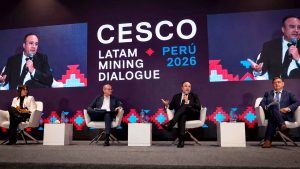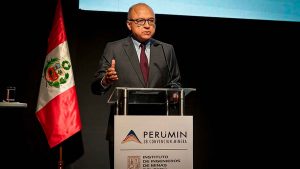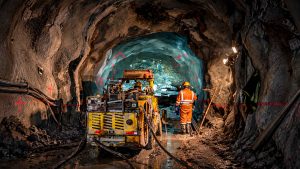
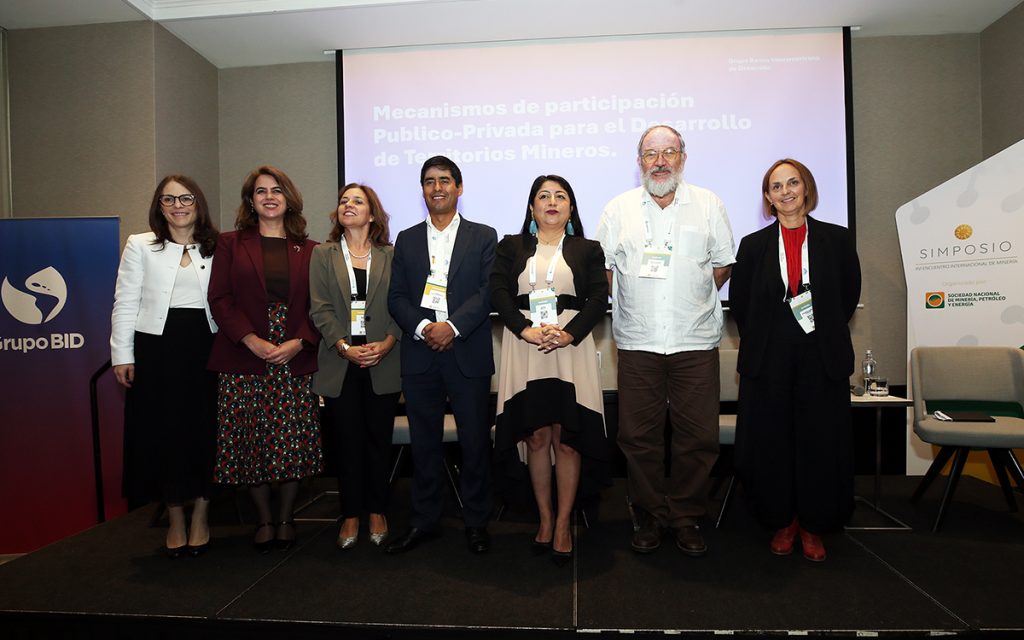
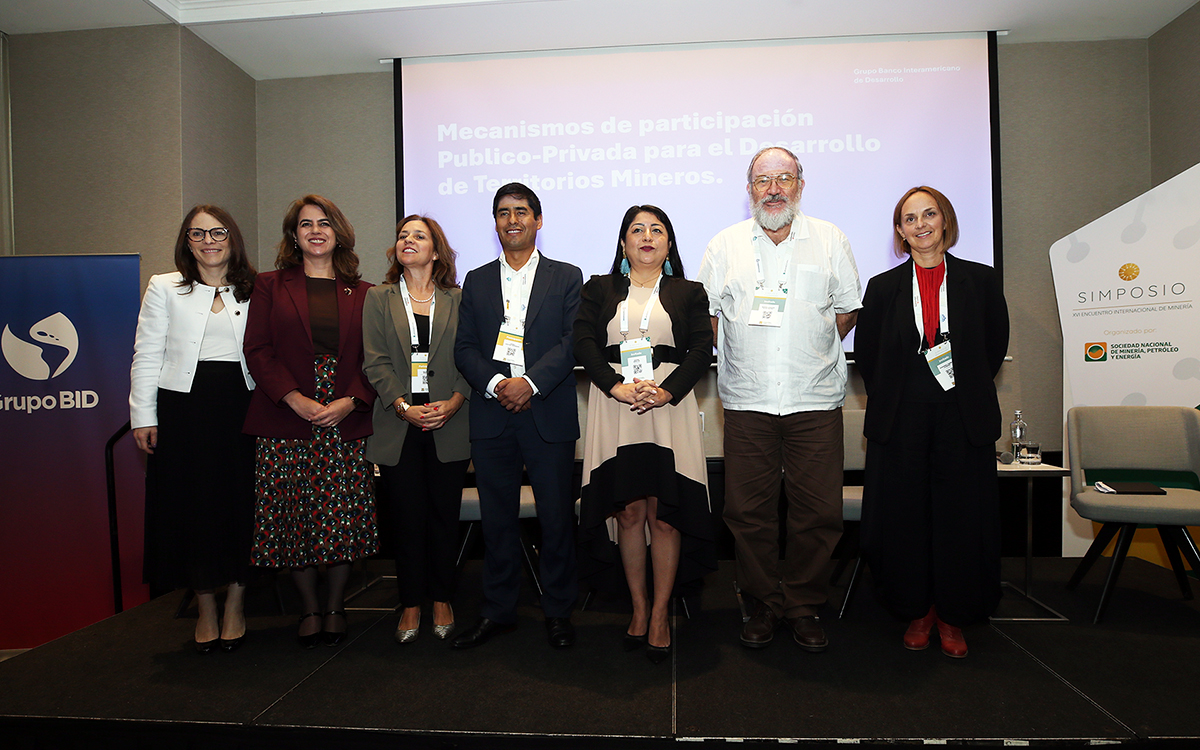
Within the framework of the SYMPOSIUM – XVI International Mining Meeting, organized by the National Society of Mining, Petroleum and Energy, the Inter-American Development Bank (IDB) led the session “Public-private partnership mechanisms for the development of mining territories”, a space dedicated to analyzing the challenges and opportunities for achieving the sustainable transformation of the country's mining regions.
During the presentation, Matilde Bordón, the IDB’s representative in Peru, highlighted the country’s privileged position as one of the world’s leading producers of copper and silver, as well as its leadership in mining exports, which account for approximately 10% of GDP and 60% of national exports. She also noted that Latin America accounts for 30% of the global supply of minerals critical to the energy transition.
Despite these figures, Ana Margarita Trujillo, principal investment officer and head of mining at BID Invest, warned that the region still faces the challenge of fully integrating into global value chains and increasing the added value of its production.
In response to this challenge, Carolina Rojas, head of the IDB's mining group, presented the IDB LAC Minerals initiative, which aims to be a bridge between Latin America, the Caribbean, and the rest of the world to promote the development of sustainable mining value chains. The proposal is based on three pillars: public policy reforms to enable investments, mobilization of private investment and risk management, and promotion of infrastructure and value chain expansion.
“Peru has the potential to become a global strategic supplier of critical minerals, but to achieve this, it is necessary to overcome limitations in value-added supply chains and enabling infrastructure. In this regard, from the IDB, we seek to articulate technical and financial instruments to accelerate the mining development of the country and the region,” Rojas added.
Subsequently, a panel of experts from the public and private sectors addressed key issues such as the efficiency in the use of public resources, the need for better articulation of participation mechanisms (such as PPPs and OxIs), and the importance of having a long-term territorial vision that involves companies, governments, and communities as protagonists of development.
Denisse Miralles, Director of Decentralized Investments at ProInversión, emphasized that “coordination is fundamental to leverage existing resources and close gaps; public-private mechanisms cannot be optional for the private sector if we want to achieve real impact in communities.”.
For his part, Roger Guevara, regional governor of Cajamarca, shared his management experience, emphasizing the importance of having legitimized and committed authorities with a long-term territorial policy and stability in public management.
Alexandra Laverdure, Institutional Relations Manager at Hudbay, highlighted the need to work on a comprehensive development perspective, betting on the continuous improvement of education, health, and the generation of new skills in the local population. “The important thing is that the community becomes the protagonist of its own development,” she indicated.
In turn, researcher Manuel Glave, from GRADE, emphasized the urgency of having integrated information systems and multi-actor dialogue spaces that allow for a clear differentiation of public and private roles, and coordination of investment and development strategies.
The panel agreed that Peru is going through a historic opportunity, not only due to high international demand for minerals but also because of its potential to drive inclusive and sustainable territorial development, based on long-term planning and effective coordination between the state, the private sector, and international cooperation. The IDB reiterated its commitment to continue supporting this process.