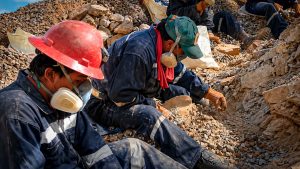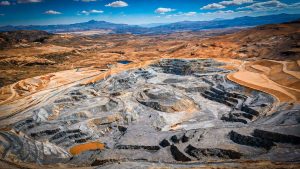
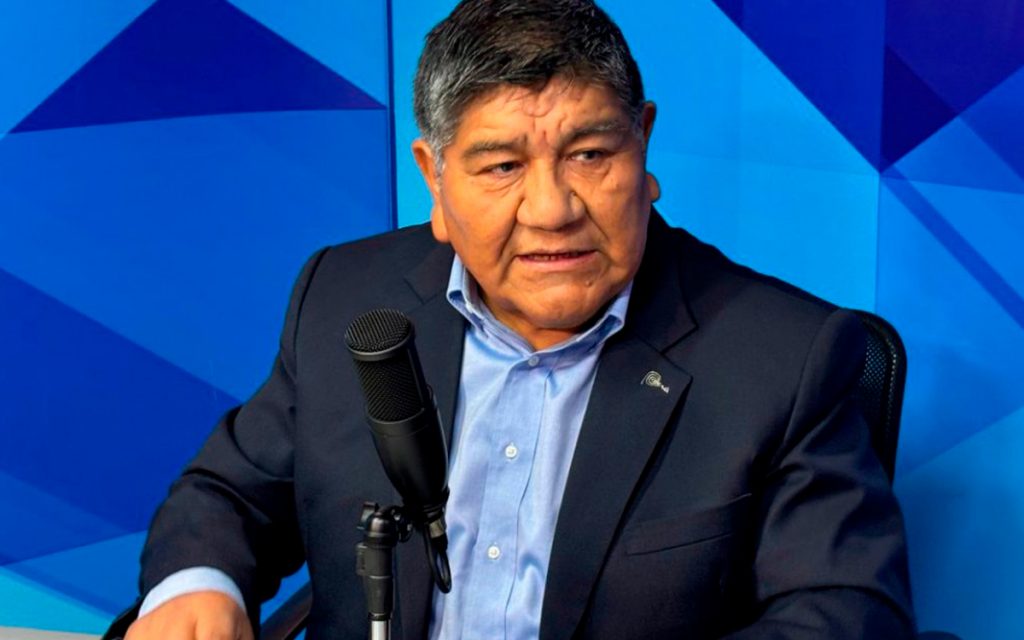
Rómulo Mucho, former Minister of Energy and Mines, emphasized that illegal mining has caused terrible damage to the country in relation to investors, therefore, he demanded a territorial approach to address the situation in critical areas such as Patáz, Secocha, Piura, and Puno. He added that a commitment is required between the State, private companies, academia, and civil society to promote development projects.
“Illegal and informal mining in Peru is almost localized, but each site has its peculiarities; you can't lump everything together. Specific work is required in each case. For example, we have to address Patáz, and only by resolving its conflict will we be able to more easily resolve other areas like Secocha, Puno, and Piura,” he said through the Regional Communication Network (RCR).
In that regard, he announced that in October an Agromin conference will be held in Piura with national and international experts, with the aim of discussing sustainable projects that allow for better resource utilization. “Developed countries advance at 100 kilometers per hour, so a joint commitment between the state, companies, academia, and civil society is urgently needed,” he emphasized.
Mucho argued that modern mining not only provides the minerals necessary for everyday life but is also the foundation for clean energy. “Without copper, without lithium, and without rare earth elements, there will be no possible energy transition. Climate change is already hitting us with droughts, fires, and frosts, and Peru, being a megadiverse yet vulnerable country, cannot afford to fall behind,” he stated.
Therefore, he called for leaving behind diagnoses and excessive regulation that hinder development, as Peru is over-diagnosed and over-regulated, with many theorists but few working in the field. “What we need is not more talk, but action. Only then can we leave a country truly on the path to development for future generations,” he mentioned.
He pointed out that Peru has vast reserves with over 40 million tons of copper that are not being exploited, while countries like Canada, the United States, and Argentina are moving forward with incentives and more agile legal frameworks. “The Congo has already surpassed us in production, and Zambia is on the verge of doing so, while here projects remain stalled due to social issues and a lack of investment confidence,” he concluded.
Source: REGIONAL COMMUNICATION NETWORK